 by Symphonic Strategies
Why do residents keep getting sent to another office?
One service makes a referral. Another understands a different promise. A resident is left to make the connection.
What should a resident be able to count on?
Explore this situation ↗A county referral. A product promise. A grant expectation. Each depends on groups understanding what they need from one another. See how examining one connection reveals the next useful question.
Follow a fictional leadership team as it examines where expectations, responsibilities and support need to connect, and discovers which question to ask next.
Two guided situations · Downloadable leadership briefs · No sign-in or upload required
One service makes a referral. Another understands a different promise. A resident is left to make the connection.
What should a resident be able to count on?
Explore this situation ↗A grant can get a service started. The continuing service promise may depend on support other groups have not agreed to provide.
Which commitments continue after the funding ends?
Explore funding & commitments ↗These short fictional previews show the same inquiry approach in a business and a foundation. Start with what the groups understand differently, then follow the question that could change a decision.
Marketing hears that customers need easier integration with the systems they already use. R&D is building advanced analytics its team wants to develop. Sales is promising an integration that is neither available nor planned.
“Customers tell us connecting to their existing systems matters most.”
“Our next release adds the analytics capabilities we want to advance.”
“We’ve told the prospect our product will connect to their system.”
The connection to examine: How customer insight informs product choices, and how those choices set the boundaries of a customer promise.
Bring the customer evidence and the reasons for the current product choices into the same conversation. A feature request, a build decision and a sales commitment may be telling three different stories.
What evidence would help us agree which customer need matters most, and who can make that choice?
What explains the gap between that priority and what R&D is building?
Then ask: Given what is actually available or agreed for development, what can Sales responsibly promise, and which existing commitments need clarification?
A national foundation asks local partners to create lasting change. Program teams encourage adaptation, grants cover one year of defined activities, and reporting asks every partner to demonstrate the same outcomes.
“Partners need room to adapt their approach to local conditions.”
“The agreement supports one year of specified activities.”
“We request the same outcome evidence from each partner.”
The connection to examine: How program expectations connect to grant terms, partner flexibility and the evidence requested.
Read the program expectations, grant terms and reporting requests together. Invite partners to explain what those arrangements make possible, respecting their own goals and decision authority.
What conditions are we assuming partners can create, and have we discussed those assumptions with them?
Does the evidence we request help us understand progress in each partner’s context and timeframe?
Then ask: What needs clarification before the next grant cycle or renewal: the intended results, the support offered or the evidence requested?
These sample pages come from the Cedar Valley resident-services brief. Open a page to inspect it, or download the full document above.
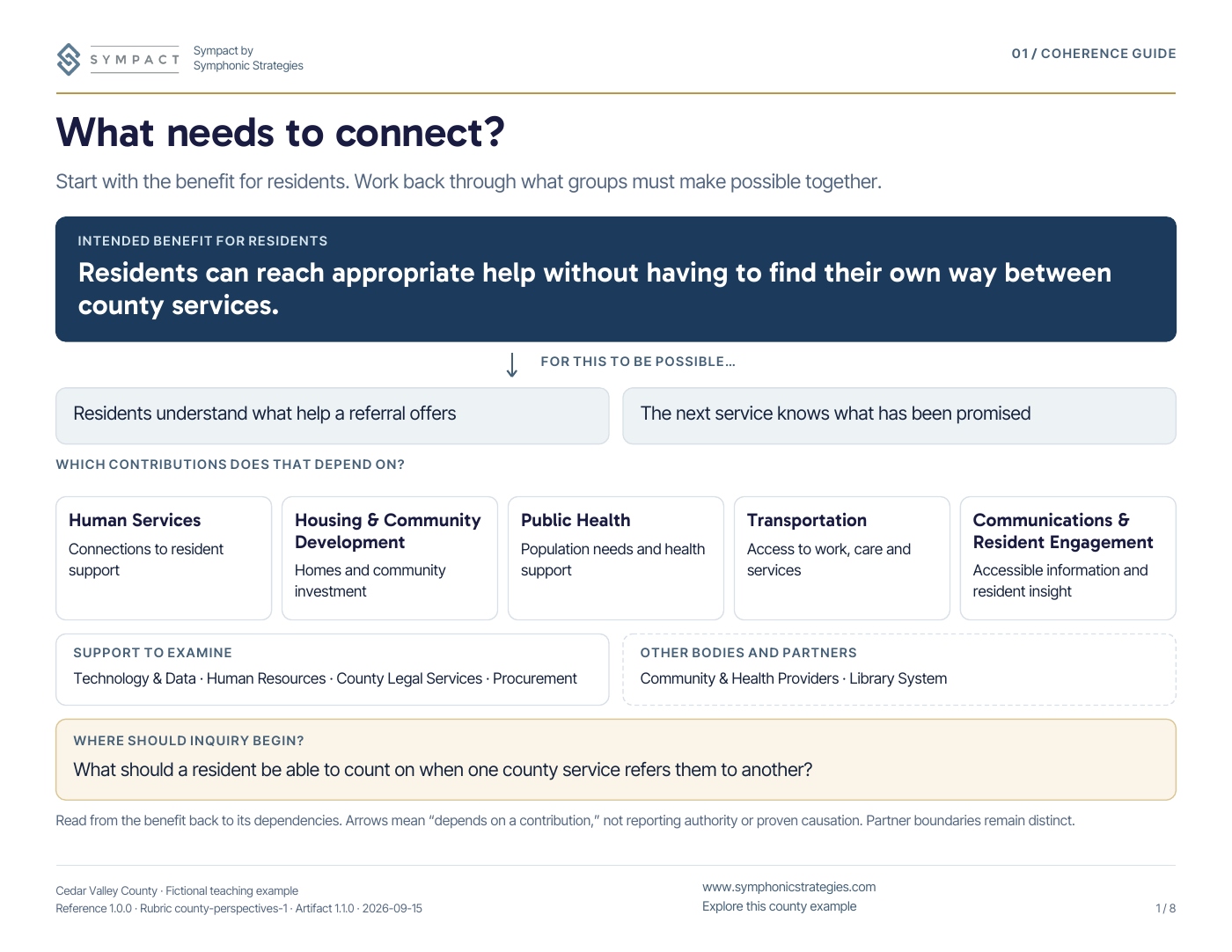
See what each group needs from the others.
Enlarge this sample →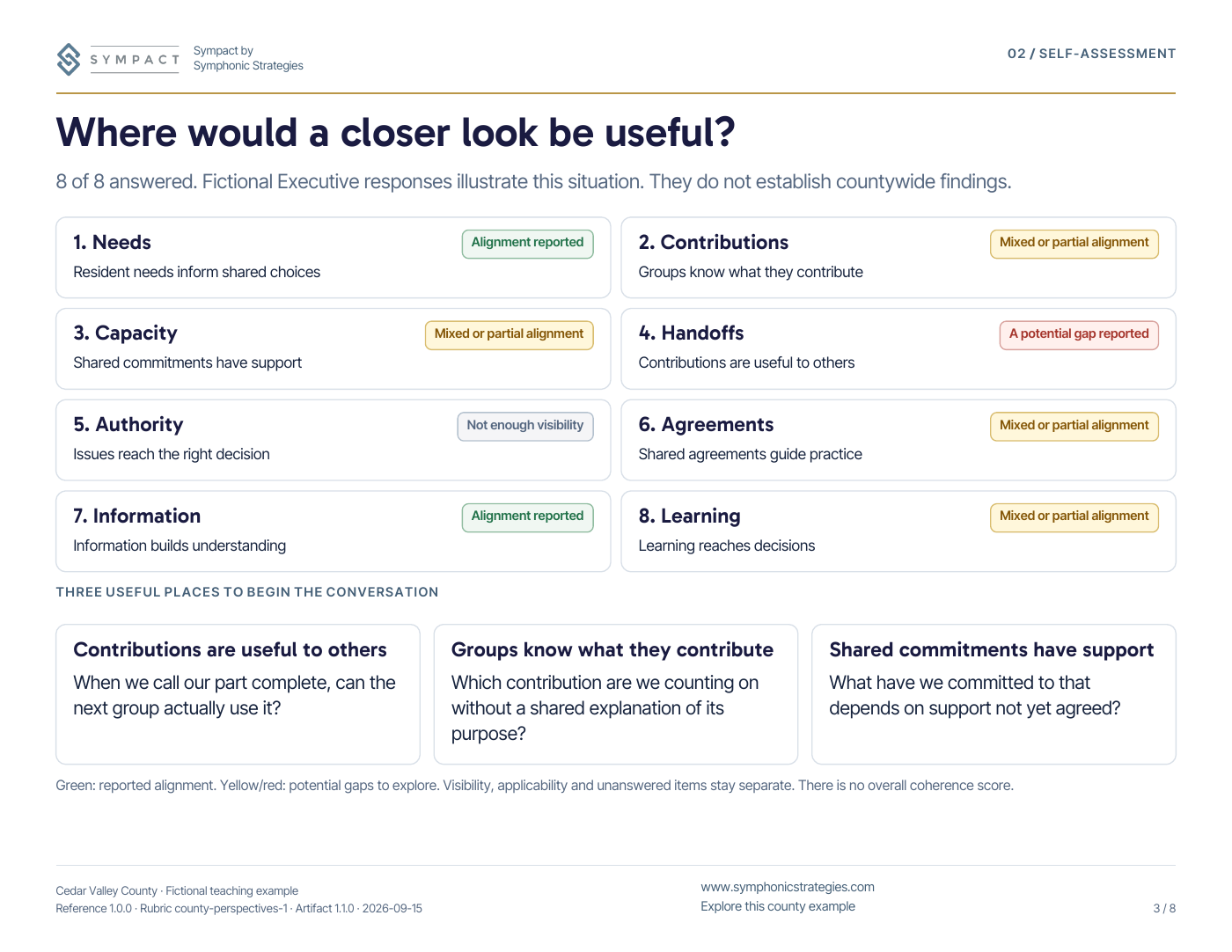
Distinguish a reported gap from a question that is still open.
Enlarge this sample →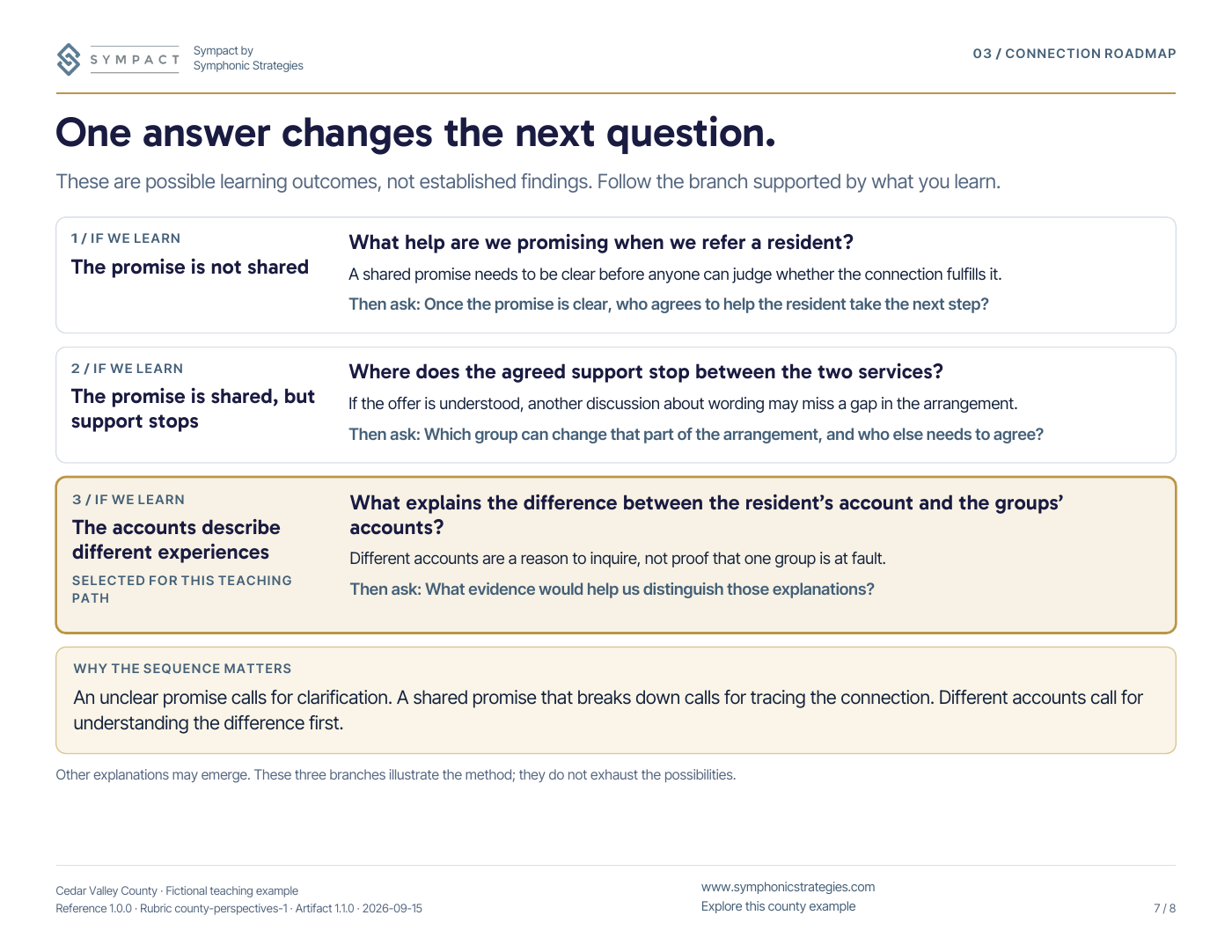
See why different answers lead to different questions.
Enlarge this sample →Start with a promise, an expectation or a shared priority that depends on several groups. We can discuss what would help you understand that connection and what to ask next.
Discuss your organization →